Books
“The book’s focus on problem prevention from the very start is much needed in every endeavor. Everyone who cares about project success should read this book.”
— J. Grucza, PMP
"The book validates my thought process in certain areas, has helped me think about other possible underlying issues, and has given me ideas on how to approach guiding teams."
— J. Horgan, Delivery Management Leader
"The case studies ground the book in real-world experience and make the concepts easy to relate to. The recommendations and checklists are highly practical and actionable."
— S. Mohanty, Management Consultant
“Extremely well done; thoughtful, practical, and easy to read. I would recommend Stop Project Killers as a handbook for program risk management.”
— A. Banerjee, Digital Transformation Lead
About the book…
If you’ve ever watched a project drift off course despite everyone’s best efforts, you’re not alone. Behind every missed milestone or chaotic backlog is a deeper root cause — a project killer — quietly shaping decisions, behaviors, and outcomes.
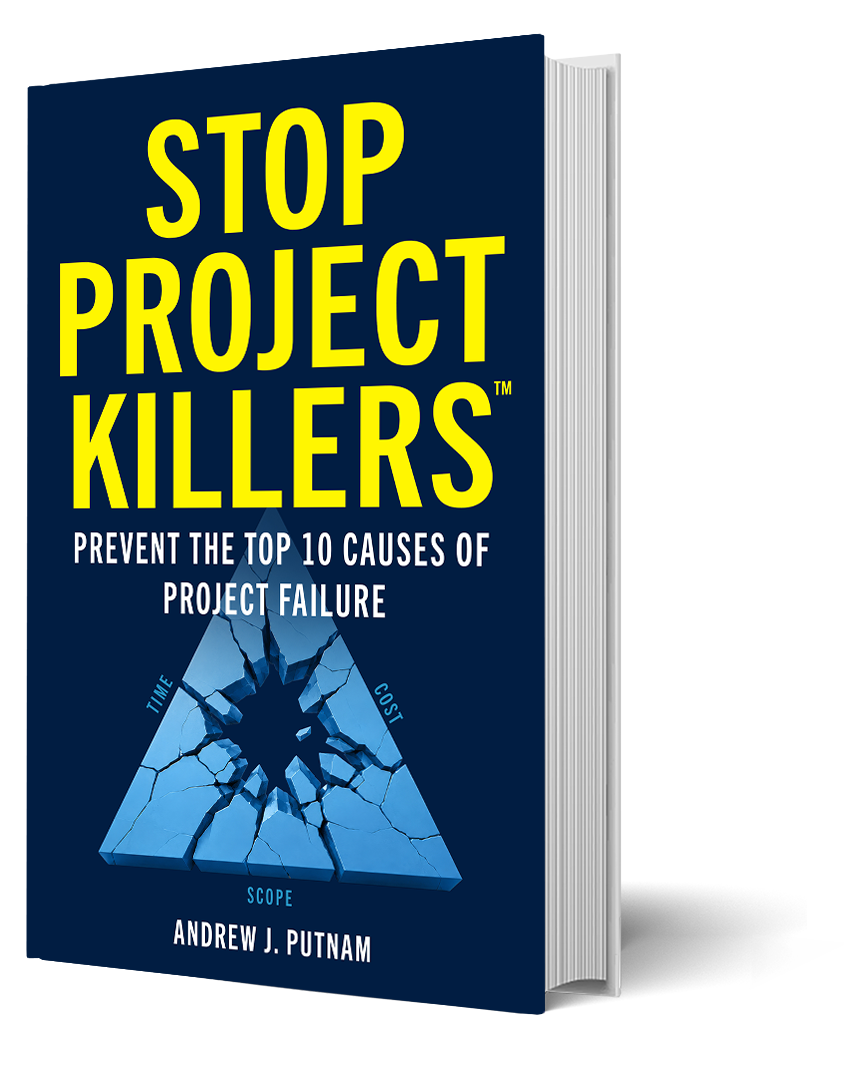
Stop Project Killers™ reveals the ten killers that appear across industries and methodologies and gives you a practical, repeatable way to diagnose and eliminate them. Designed as both a start‑to‑finish read and a quick‑reference field guide, the book helps you spot warning signs early, understand what each killer will do if ignored, and take immediate action to restore clarity and momentum.
This is the handbook for project managers who want fewer surprises, fewer fire drills, and more successful deliveries.
What You’ll Learn
Diagnose the real root cause behind project symptoms
See consequences early — before failure becomes unavoidable
Apply practical, immediate remediation steps
Stabilize a project in distress with a clear recovery path
Build habits that prevent repeat failures
Use AI to accelerate clarity, communication, and decision‑making
The 10 Project Killers
Strategic Misalignment
Inadequate Sponsorship
Ineffective Governance
Unrealistic Constraints
Unclear or Changing Requirements
Inadequate Planning
Lack of Resources and Capability Gaps
Poor Communication
Weak Stakeholder Engagement
Failure to Manage Organizational Change
Buy The Book Today!



The Early Warning Report™
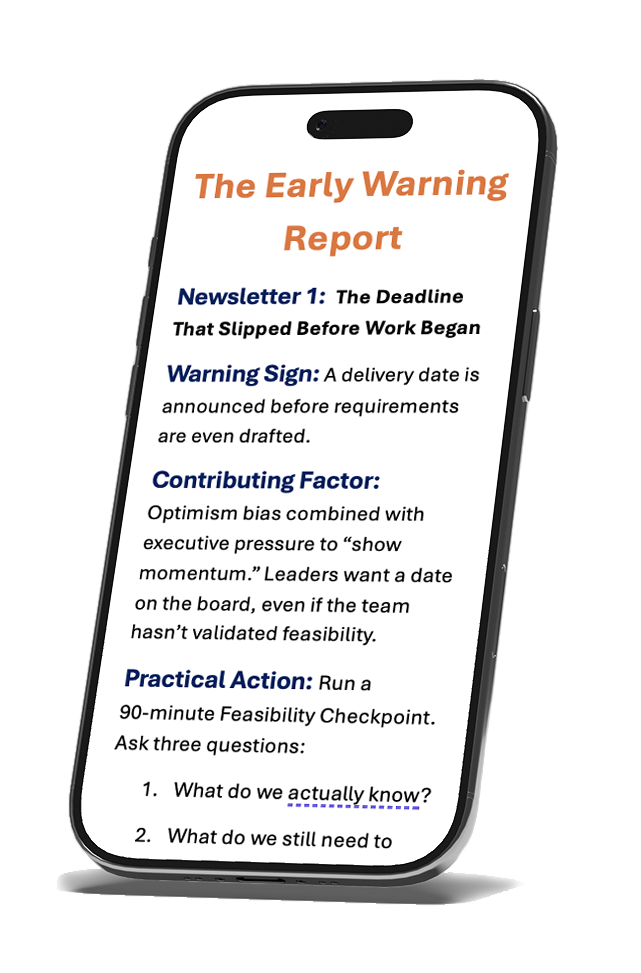
Don’t forget to subscribe to The Early Warning Report, the official newsletter of Stop Project Killers. Learn how experienced project leaders recognize warning signs, interpret what they mean, and respond before small issues become costly failures.